

Dr. Nathan Cohen ("Chip") - the founder and CEO of Fractal Antenna Systems, Inc. - is a physicist, radio astronomer, and innovator/inventor. Dr Cohen possesses a broad scope of knowledge across many fields, which has led him down many roads throughout his career. He is a PhD; he is a former professor of Science and Engineering; he spent time as a Quant trader on Wall Street; he studied astrophysics under Frank Drake; he was a songwriter in the music business; and is a published author. Other accolades aside, Dr Cohen is perhaps most notable for his contributions to field of electromagnetics being responsible for over 100 technical papers and 94 patents. He is the inventor of fractal antennas and fractal metamaterials, holding the source patents in these fields. Fractal Antenna Systems was founded on this breakthrough innovation, and Dr. Cohen has successfully directed the company for over 20 years.
Cohen started his academic career, at 17, at Harvard University under Jack Pierce, where he worked as a research assistant on VLF radio propagation and radio navigation (OMEGA). While taking an NSF summer course for high school seniors in physics and astronomy at the University of Iowa, he did research on Jovian decametric emission, and then spent a semester in engineering at Union College (NY) where he worked at the Dudley Observatory on its Fullam radio telescope. In 1974 he moved to Brandeis University as a physics and mathematics major, and he published his first scientific paper, while learning radio astronomy and interferometry (arrays) under John Wardle, graduating with highest physics honors in 1977.
Cohen did his graduate work in astrophysics at Cornell University under Frank Drake, where he conducted extensive radio astronomy observing efforts at Arecibo Observatory; NRAO; the VLA; and other facilities. In 1979 he became a Visiting Scholar at Massachusetts Institute of Technology, working under Irwin Shapiro on Very Long Baseline Interferometry (note: astronomers call arrays --‘interferometers’). He received his M.S in astrophysics from Cornell in 1982. He conducted thesis work at Haystack Observatory while a graduate research assistant at the Harvard University/ Smithsonian Center for Astrophysics and received his Ph.D. in 1985 in astrophysics from Cornell University with extensive work on radio interferometry and gravitational lenses..
Since 1985, Cohen has applied analytical techniques (‘quants’) to stock and options trading, both off-floor, and on-floor as an AMEX options trader. This makes him one of the very first “QUANTS” of Wall Street. In 1987, Cohen joined Boston University (a hotspot in the development of fractal geometry), where he retired in 2002 after various appointments as a professor of science; engineering; telecommunications; and mechanical engineering, as well as a director of the Science and Engineering, and Engineering Management programs. He has taught astronomy; bioastronomy; engineering mechanics; electric circuit theory; signals and systems in telecommunications; process and operations management; history of technology; calculus; differential equations; biology; discrete mathematics; cosmology; and several other courses. Cohen has also held research positions at Les Houches; NASA JPL; NASA Ames; NAIC. Cohen has also been a principle in HRN Investment (1984-1989) and such startups as Biologix (1985-1988), and Gensonics (1995-1999). He was also a consultant and principle of the Boston Research Group (1985-1989).
Dr. Cohen built the first bona fide fractal element antenna in 1988. He is now one of the world’s most innovative antenna designers, now with 26 years of professional experience, and 53 years of practical experience, stemming from his ‘ham’ antenna work over many years. Cohen has been a leading force in the commercial adoption of fractal antennas. Upon their discovery, Cohen and other pioneers in the field faced tremendous inertial resistance to this new, breakthrough technology by incumbent vested interests. However, over the last two decades, the technology's benefits have become well accepted, having been proven time and time again. Fractal antennas are now ubiquitously applied in commercial and government applications around the globe.
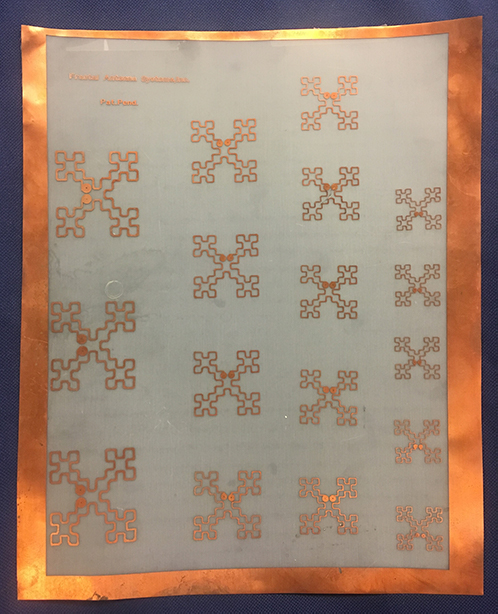
In 1995, Cohen co-founded Fractal Antenna Systems Inc. (now in Bedford,MA) and has held position as CTO, Chairman, and his present position of Chief Executive Officer. Over Fractal's 24 year history, Dr. Cohen has been a central force in the commercial success of the company. In the early days of the company, he was instrumental in laying the technical foundation and educating the market of the benefits of fractal antennas. With this baseline, he has successfully guided the company through the rapidly changing currents of the wireless industry. Over this history, Fractal has developed a presence in nearly every antenna end market from devices, to infrastructure, to government. Today the company continues to push the boundaries of wireless communications, applying our technology to emergent fields such as 5G, commercial millimeter, and IoT.
Cohen has published over 100 technical and scientific papers, and three books (‘Gravity’s Lens’, and ‘Mysteries of the Milky Way’ (w/ D. Goldsmith); Benoit Mandelbrot—A Life in Many Dimensions (ed w/ Michael Frame) ). He holds 94 US patents (and many foreign patents) on ultrasound and medical devices, real-time deconvolution, compression, image processing, antennas, and fractal engineering. He is the inventor of the invisible cloak.
Cohen’s work has been described in CNN’s Science and Technology Week (1991); Wired On Line (1997); Scientific American (1999); Sky and Telescope (2001); Discover Magazine (1998); Business Week (1997); New Scientist (1998); PBS’s Science Trek (2009) and PBS’s NOVA (2008 and 2010) as well and many other publications.
Cohen is a member of the IEEE, and is current Vice President of the RCA. He also served as managing editor of the peer reviewed journal FRACTALS.
Fractal Antenna Systems is a world leader in RF and electromagnetic innovation. Our fractal antennas and metamaterials allow us to deliver the top performing wideband RF solutions on the market. This superior performance makes our technology critical to enable the future of wireless.


